Monsters in the Gallery: A Lovecraftian Psychological Thriller "Pickman's Model"
Game plan
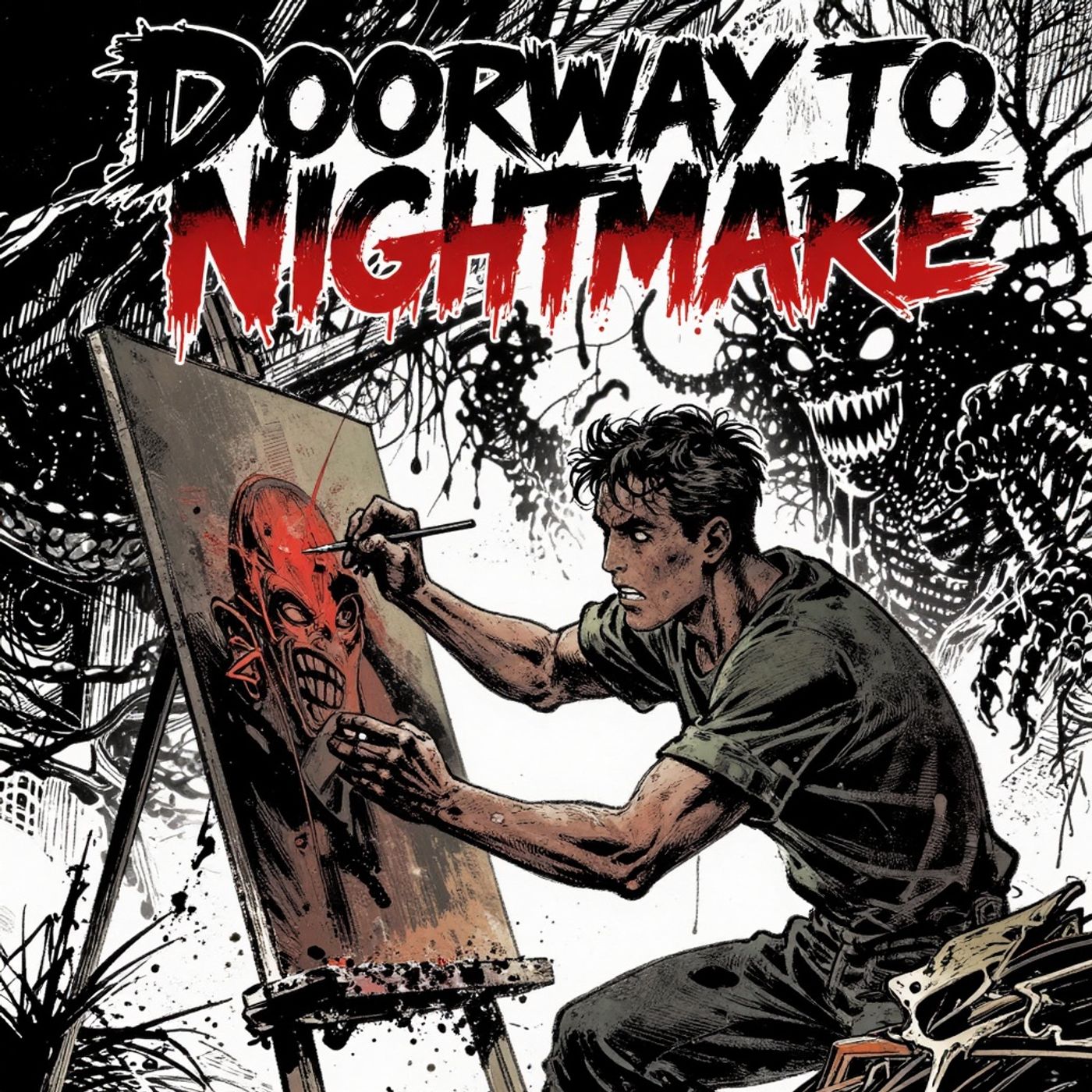
In this spine-chilling episode of Doorway To Nightmare, we bring to life a masterful, full-cast audio adaptation of H.P. Lovecraft’s legendary cosmic horror short story, "Pickman's Model."
Richard Upton Pickman is a brilliant painter whose genius is overshadowed by the sheer, stomach-churning terror of his art. His canvases depict grotesque, subterranean monsters executing horrific acts—works so disturbing that no legitimate gallery dares to display them. Driven by a mix of concern and morbid curiosity, a close friend accepts a rare invitation to Pickman's private studio to view his hidden masterpieces. But as the dark secrets behind the canvas are peeled away, the friend uncovers a terrifying truth: these monsters aren't born from an artist's twisted imagination. They are painted from life.
Hit subscribe and tune into this slow-burning, psychological horror audio play to discover the ultimate cosmic nightmare lurking just beneath the surface of the canvas.
SOME CLIPS AND AUDIO HAVE BEEN USED UNDER THE CREATIVE COMMONS FAIR USE ACT. NO INTENTIONAL COPYRIGHT INFRINGEMENT IS MADE AND ALL COPYRIGHTS BELONG TO THE ORIGINAL OWNERS
HELP SUPPORT OUR CHANNEL!!!
https://www.buymeacoffee.com/doorway
https://www.patreon.com/doorwaytonightmare
MERCHANDISE AVAILABLE AT OUR STORE
https://www.doorwaytonightmare.com
EPISODES NOW AVAILABLE ON IHeart.com, SPOTIFY, PANDORA, APPLE, AUDIBLE
AND OTHER PODCAST PLATFORMS!
Please like, share, subscribe, and comment
All music used Licensed under Creative Commons Attribution 3.0
https://creativecommons.org/licenses/..
Carnival Music by Darren Curtis (Creative Commons Attribution 3.0)
Kevin MacLeod https://www.youtube.com/channel/UCSZX...
Shankar Yogi
/ musicwithsh. .
Speaker 1: It lies in wait amidst your dreams, where nothing is ever how it seems. It is a portal to a terrifying world beyond the doorway to nightmare. Nightmare. Come in. Welcome. I'm Artemis Black. To the aficionados of the occult, the stories of monsters, ghosts, and the fantastic, we give you one of the greatest storytellers, H.P. Lovecraft, who is responsible for our tale tonight.
Speaker 2: You're not making any sense, Thurber.
Speaker 3: Pour us another drink, Elliot. Because I think you're going to need it.
Speaker 4: I know that I do.
Speaker 2: You knew why the gallery wouldn't display Pickman's, well, um, art. No self-respecting art lover would dare display it.
Speaker 3: To say that his works were macabre is an understatement. But what he showed me on that last night, could only be considered monstrous.
Speaker 1: Our mystery drama, Pickman's Model, was adapted from the short story by H.P. Lovecraft by Winslow Swan and edited by Crimson McKenzie. Our stars include Nick Davis, Jonathan Rosignol, and Raven Adams. I'll return shortly with Act One. While Edgar Allan Poe focused on the nightmares of the human mind, Howard Phillips Lovecraft's stories leaned more towards the monsters that dwell within the earth and the imaginations. His philosophy of cosmicism, the belief that humanity is an insignificant part of the cosmos and can be swept away at any moment, is the main theme of his horror fiction.
Speaker 2: Thank you for the invite, Thurber, and thank you for the drink.
Speaker 3: You needn't think that I'm crazy, Elliot.
Speaker 2: I never said that you were.
Speaker 3: Just because I would rather take a taxi to get here than that damn subway, there's no reason to think.
Speaker 2: We got here, didn't we? And I don't think that you are crazy.
Speaker 3: Why don't you laugh at your Uncle Oliver? He won't even ride in a car. Or a taxi.
Speaker 2: Thurber, old man, calm down. You seem to be more nervous than when I saw you last year.
Speaker 3: Perhaps I am.
Speaker 2: So what has made you this way?
Speaker 3: I don't need a third degree from you. I'm sorry. It's a wonder that I'm sane at all.
Speaker 2: I wasn't giving you the third degree. I simply asked why you decided to drop Pickman from your agency.
Speaker 3: You didn't used to be so inquisitive. Still, I suppose you should hear the entire story.
Speaker 2: And what did become of Pickman?
Speaker 3: I haven't the foggiest idea of what happened to Richard Upton Pickman, and I don't care to know. I don't even want to think about where he might even be.
Speaker 2: After the Boston Art Club dropped him, as well as Dr.
Speaker 1: Reed.
Speaker 3: Let the police do their usual diligent work. They won't find anything. They have yet to discover that rotting apartment in the north end he rented under the name of Peters.
Speaker 2: You said something earlier about that. Do you know where it is?
Speaker 3: I'm sure that I could find it again. Not that I would. Even in broad daylight. It's the reason I won't use the subway anymore or even go down into the cellars. There is something there. Something horrifying.
Speaker 5: Why, it's ghastly.
Speaker 3: I would call it Genius. Pikmin always had a way with faces.
Speaker 5: But look at it, Thurber. The title alone makes one shudder.
Speaker 3: I will grant you that. Ghoul Feeding is a rather strange title, but it definitely depicts the painting.
Speaker 5: A strange creature, almost canine-like, hunched over an open grave and.
Speaker 3: And having an evening meal, eh, Dr.
Speaker 1: Reed?
Speaker 5: It's enough to make one lose his own evening meal. No wonder the museum wouldn't accept it as a gift.
Speaker 3: Is this the reason that Pickman was kicked out of the arts club?
Speaker 5: Naturally, Thurber. Would you expect anything less?
Speaker 3: From your lot?
Speaker 1: No.
Speaker 3: Not at all. But if I've said it before, I'll say it again. Morbid art doesn't shock me. And when someone has the genius that Pickman has, it is an honor and a privilege to know him, no matter which direction his work takes.
Speaker 2: Ugh, I remember that painting he titled, Ghoul Feeding. Ugh, it gave me nightmares for weeks.
Speaker 3: Any magazine cover hat can splash paint around, call it a nightmare... or a witch's sabbath, or even demon. But Pickman? Only a great painter like him could make such a thing really scare or ring true.
Speaker 2: I remember him saying that he only painted what he could see.
Speaker 3: Don't ask me what Pickman saw. You know, Elliot, in ordinary art, there is a vast difference in something real and something that only the imagination can draw. I'm convinced that I would not be alive if I had ever seen what that man, if he were indeed a man, saw. But why, Dr.
Speaker 4: Reed?
Speaker 3: Why would the art club and everyone else draw Pikmin?
Speaker 5: When was the last time you saw a Pikmin?
Speaker 3: Oh, I suppose a few weeks ago.
Speaker 5: No, Thurber. I mean, really looked at the man. I'm not sure if it is his diet... or perhaps an eccentricity, but it isn't just his paintings that are unnerving.
Speaker 3: Then what is it? I grant you that ghoul-feeding is frightening, but that is the precise reason that I admire Pickman.
Speaker 5: He, the man, frightens me more and more every day. His very features and expressions are slowly developing into something... Something....
Speaker 3: Well, spit it out, man.
Speaker 5: Something that is less than human.
Speaker 1: Andy Warhol once said, Don't think about making art. Just get it done. Let everyone else decide if it's good or bad, whether they love it or hate it. while they are deciding, make even more art. I'll be back shortly with Act Two. Edgar Degas once said, drawing is not what you see, but what you must make others see.
Speaker 2: So, where is ghoul-feeding now?
Speaker 3: Pickman's father has it at his home in Salem. You know that Pickman's great-great-great-great-grandmother was hanged as a witch in 1692?
Speaker 2: Oh, I never knew that.
Speaker 3: Yes, by Cotton Mather himself.
Speaker 2: So, tell me, what happened between you and Pickman.
Speaker 3: I started a series of articles about weird paintings and artists. Pickman showed me many of his works, including ink and pencil sketches. I suppose it was my hero worship, coupled with the fact that people were having less and less to do with him, made him get very confidential with me.
Speaker 4: So, Thurber, what do you think?
Speaker 3: Remarkable!
Speaker 4: These do not make you want to run screaming into the night?
Speaker 3: On the contrary. They are quite good. You have a way with faces, Pickman.
Speaker 4: And you have a way with listening to what some consider a madman.
Speaker 3: Well, I thank you for that.
Speaker 4: These are just some things that won't do for Newbury Street. Canvases that could never be conceived here.
Speaker 3: No!
Speaker 4: The place for the artist is definitely the North End.
Speaker 3: That slum-infested area?
Speaker 4: God, man. Don't you know the place wasn't made, but actually grew? Generation after generation lived and felt here. And died there. There was a mill on Copse Hill in 1632, and the streets were laid out by 1650.
Speaker 3: But why, Pickman? Why would you want to go there?
Speaker 4: Thurber, I will wager you that in eight of the ten houses built before the 1700s, I could show you something strange in the cellars. There isn't a month that goes by that you don't hear about workers finding old tunnels.
Speaker 3: And you have found these tunnels?
Speaker 4: I've done much more than that. I have a studio on the north end where I can let myself go as I never could in Newbury Street.
Speaker 3: Best not to tell the art club about it.
Speaker 4: Those imbecilic fools.
Speaker 1: And Dr.
Speaker 4: Reed is the biggest one whispering that I'm some sort of monster. I decided a long time ago that one must paint terror as well as the beauty of light.
Speaker 3: I must say, you have garnered my interest.
Speaker 4: I found a place not too far from the train station. I used the cellar as a studio. There's an old brick well down there. Curious sort of thing.
Speaker 3: You did say something about a network of tunnels around the North End. Do you think this... well of yours could be a connection?
Speaker 1: Possibly.
Speaker 4: Look, you're interested in this sort of thing. Come with me tonight, and I'll show you what I've been.
Speaker 1: painting.
Speaker 3: You weren't kidding when you said the place was dilapidated. Even the windows are boarded up.
Speaker 4: Just the way I like it. Here, let me light a candle.
Speaker 3: Gah! Dear God!
Speaker 4: I warned you, Thurber.
Speaker 3: You said that you let yourself go, but. This? What do you think? Hideous! The backgrounds are of deep woods, cliffs by the sea, and isn't that... Cops Hill Burying Grounds?
Speaker 4: You have a good eye.
Speaker 3: But that's only a few blocks from here. And the creatures that you painted, two-legged, canine features, and slumping forward, they all seem to be eating on... on... corpses!
Speaker 2: Well, I can understand why he didn't show those at Newbury Street.
Speaker 3: All of them depicted some sort of creature in various poses. They were leaping through windows or squatting on the chests of sleeping people. One showed a group of these creatures looking up at a hanged witch whose face was much like theirs.
Speaker 2: But you're not a three-year-old, Thurber. You've seen such paintings before.
Speaker 3: No, Elliot, not like these. It was the faces, the accursed faces that leered and slathered out of the canvas with the very breath of life. I believe that they were alive.
Speaker 2: Here, have another drink. I think you need it.
Speaker 3: Elliot, I swear, it was as if Pikmin had waked the fires of hell in Pikmin, and his brush had been a nightmare spawning wand. What do you call this one, Pickman?
Speaker 4: The Lesson. What do you think of it?
Speaker 3: It's definitely intriguing.
Speaker 4: You know, of course, the stories of these creatures stealing children in the night and replacing them with their own young.
Speaker 1: Yes, I do.
Speaker 3: This painting, showing these creatures huddled over another corpse, they seem to be teaching. A small child on how to... to feed? Feed as they do?
Speaker 4: This is what happens to those stolen babies. In this painting, anyway.
Speaker 3: There seems to be a hideous relationship in the faces of those creatures and the child. And this one.
Speaker 4: A pious man reading from the scriptures to his family, sitting in an ancient drawing room.
Speaker 3: All of them look normal except for the boy. Obviously more kin to the creatures than the father in the portrait.
Speaker 4: Notice anything unusual?
Speaker 3: My God, Pikmin. The boy looks like.
Speaker 1: like.
Speaker 3: you. Come on, Febber.
Speaker 4: Let me show you some of my modern studies.
Speaker 3: God dear Lord in merciful heaven!
Speaker 4: So what do you think of my second gallery?
Speaker 1: How does the old saying go? Beauty is in the eye of the beholder. But what of nightmares that are committed to canvas? What terror awakes when I return with act three? The artist Pickman has escorted his friend Thurber to yet another room, where the horrors are much worse than before.
Speaker 2: So, what did you see that made you scream?
Speaker 3: Elliot, you know me. I am not one to scream at horror, but these paintings. The first room showed paintings of these creatures attacking our forefathers. But in the next, there was one called Subway Accident, which showed these creatures coming up from some unknown catacomb, attacking a platform full of people. Others showed these vile things, hiding in cellars, awaiting victims. Another showed one Reading from a Boston guidebook to a group of laughing creatures. Dear Lord and merciful heaven.
Speaker 4: So what do you think of my second gallery?
Speaker 3: Horrifying. Your paintings are not even romanticized in any way. Everything from the creatures to the victims are crystal clear.
Speaker 4: Come with me.
Speaker 2: To the cellar.
Speaker 4: Let me show you what I'm working on now.
Speaker 3: Is this the brick well you told me about?
Speaker 1: Yes.
Speaker 4: I'm sure that it leads down to the tunnels. But look over here.
Speaker 3: This canvas.
Speaker 4: Let me uncover it for you.
Speaker 3: Help!
Speaker 1: Help!
Speaker 3: What in heaven's name? A colossal, nameless thing with glaring red eyes. It's holding on its bony claws the body of a man half-chewed. You're impressed? I'm horrified.
Speaker 1: Wait.
Speaker 3: What is this pinned to the canvas?
Speaker 4: Oh, that. I take pictures of backgrounds that I'm going to use. It saves me from hauling everything outside. What?
Speaker 3: What was that?
Speaker 4: Damn rats.
Speaker 3: Sounded much bigger than rats.
Speaker 4: Wait here.
Speaker 3: I'll be back in a moment.
Speaker 1: No!
Speaker 3: Get back! Get back, all of you! Everything alright? Yes, Thurber. All is well.
Speaker 4: Heaven knows what they eat for those tunnel-touched graveyards in the sea. They must have gotten hungry and heard you scream.
Speaker 1: Better to be... cautious.
Speaker 3: And that was the last time I saw Pikmin.
Speaker 2: A remarkable story indeed. But it still doesn't explain why you dropped him as a client.
Speaker 3: Don't be impatient. It was because of that photograph I found pinned to the canvas. After that last scare, I must have crumpled it into my pocket. I assumed it was of a background that Pickman was going to use for that final canvas.
Speaker 2: And what happened to it?
Speaker 3: Burned to ashes. Elliot, Dr. Reed was correct. Richard Upton Pickman, the greatest artist I have ever known, wasn't strictly human.
Speaker 2: Thurber, what was on that photograph?
Speaker 3: Don't ask me to explain it, or what lay behind what Pickman tried to pass off as rats. All of us often wondered how he got those damned lifelike faces for his paintings.
Speaker 2: And you believe that you know?
Speaker 3: That paper wasn't a photograph of any background. What it showed was the monstrous being he was painting on that awful canvas. It was the model he was using, and its background was merely the wall of the cellar studio in detail. But by God, Elliot, it was a photograph from life. A self-portrait.
Speaker 1: And as the implication begins to sweep over Elliot, we shall take a brief pause before I return with a final word. H.P. Lovecraft was never able to support himself as an author or editor. Most of his work was published in pulp magazines during the 1920s. A revival of his work began in the 70s, and he is now regarded as one of the most significant 20th century authors of supernatural horror fictions. Our cast included Mick Davis, Jonathan Rosignol, Raven Adams, and Dave Arkapov. The script was edited by Crimson McKenzie and directed by Winslow Swan.
Speaker 1: And now, a preview of our next tale.
Speaker 5: I'm telling you, Mella, I think that I have finally found it!
Speaker 3: You do realize how insane you sound right now.
Speaker 1: I mean.
Speaker 3: You're talking about music that does not exist.
Speaker 1: Yes, but don't you see? It exists. It has just not been discovered.
Speaker 2: And for good reasons. You're talking about the destruction of all mankind.
Speaker 1: This is Artemis Black, inviting you to return with us through the doorway to nightmare for another adventure into the terrifying world of your imagination. Until next time, slumber peacefully. Epilogue. The butler did it.
 Apple Podcasts
 Castbox
 Castro
 Goodpods
 Moon FM
 Overcast
 Pocket Casts
 Podbean
 Podcast Addict
 Podcast Republic
 Spotify
 Pandora
 Audible