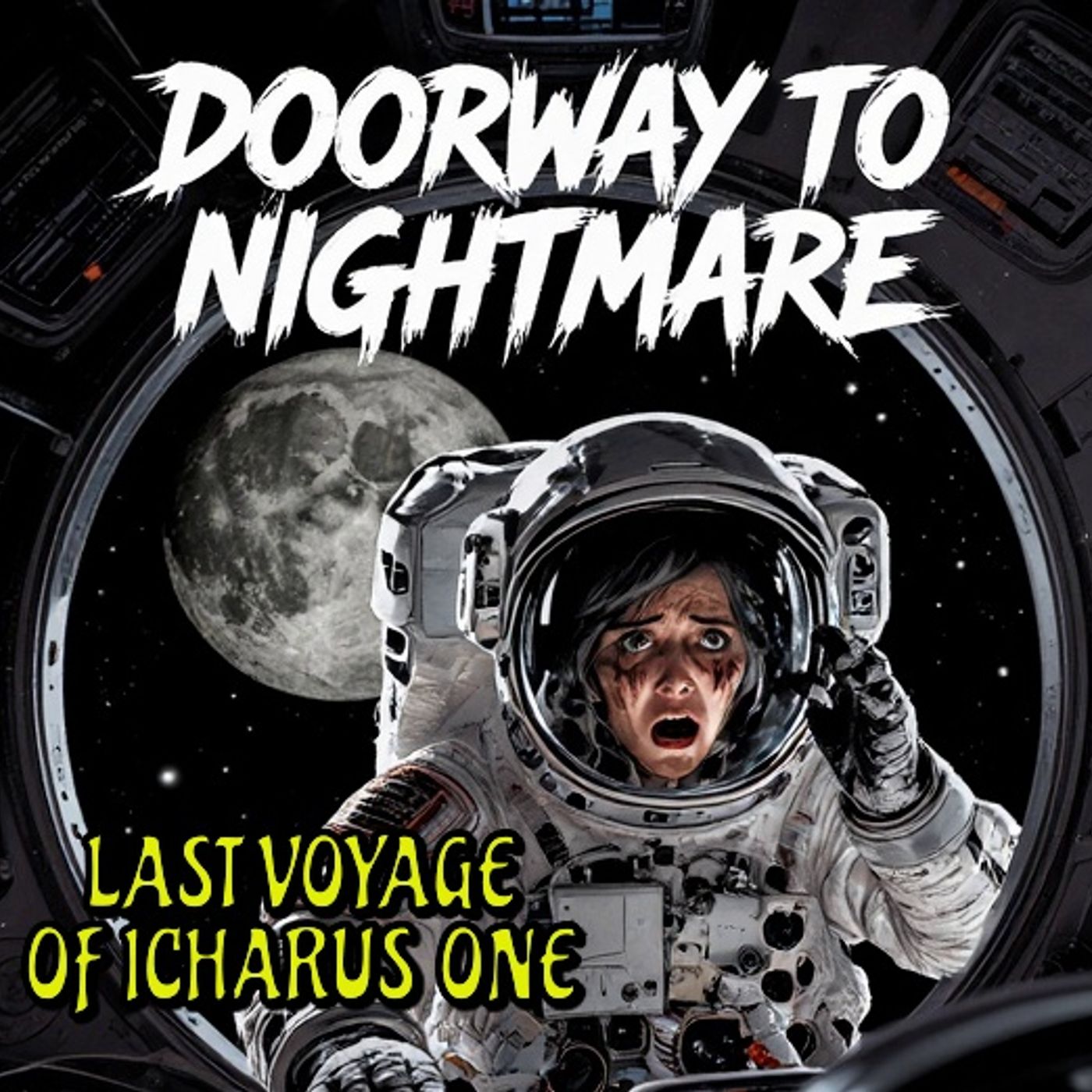
Lost Contact with a Dark Planet: A Sci-Fi Survival Thriller "Last Voyage Of Icharus One"
Game plan
In this gripping cosmic sci-fi episode of Doorway To Nightmare, titled "Last Voyage Of Icarus One," a routine mission to the moon instantly morphs into a desperate fight for survival. While the spaceship Icarus One is charting the mysterious dark side of the moon, the vessel is struck by an anomalous, blinding cosmic force.
When the shaken astronauts successfully navigate their way back around to the light side, they look out the viewing glass to find a terrifying reality: the Earth below is completely dark, and all global radio contact has been completely severed. Left drifting in the blackness, the crew must unravel what cosmic horror took out humanity before their own life support runs out.
If you love hard sci-fi horror audio dramas, post-apocalyptic survival thrillers, and psychological space mysteries like The Twilight Zone, Alien, or Event Horizon, this chilling out-of-this-world episode will hold you spellbound.
- Subscribe and Follow to step through every terrifying doorway.
- Rate and Review on Apple Podcasts to help other sci-fi horror fans find the anthology.
- Join the conversation online and share your space-horror theories using #DoorwayToNightmare.
SOME CLIPS AND AUDIO HAVE BEEN USED UNDER THE CREATIVE COMMONS FAIR USE ACT. NO INTENTIONAL COPYRIGHT INFRINGEMENT IS MADE AND ALL COPYRIGHTS BELONG TO THE ORIGINAL OWNERS
HELP SUPPORT OUR CHANNEL!!!
https://www.buymeacoffee.com/doorway
https://www.patreon.com/doorwaytonightmare
MERCHANDISE AVAILABLE AT OUR STORE
https://www.doorwaytonightmare.com
EPISODES NOW AVAILABLE ON IHeart.com, SPOTIFY, PANDORA, APPLE, AUDIBLE
AND OTHER PODCAST PLATFORMS!
Please like, share, subscribe, and comment
All music used Licensed under Creative Commons Attribution 3.0
https://creativecommons.org/licenses/..
Carnival Music by Darren Curtis (Creative Commons Attribution 3.0)
Kevin MacLeod https://www.youtube.com/channel/UCSZX...
Shankar Yogi
/ musicwithsh. .
Speaker 1: Hi, this is Winslow.
Speaker 2: This is Crimson. And if you like what we're doing, hit that like button. And if you want to hear more, subscribe.
Speaker 1: When you sleep, you enter into another world. Beyond that world lies the doorway to Nightmare. Nightmare. Come in.
Speaker 2: Welcome.
Speaker 1: I'm your host through the doorway to nightmare.
Speaker 3: I believe that this nation should commit itself to achieving the goal of before this decade is out, of landing a man on the moon and returning him safely.
Speaker 4: To the Earth.
Speaker 1: Those words were spoken by President John F. Kennedy to Congress in 1961. In 1969, man walked on the moon. The last landing on the moon was in 1971, and we have not been back since. Adam, have you noticed anything?
Speaker 5: Are you talking about?
Speaker 2: Look at the Earth. There's something very, very wrong.
Speaker 6: Doc, it's Mother Earth. Big, blue, and wonderful. Personally, I cannot wait to set my feet back on terra firma.
Speaker 2: Where are the lights?
Speaker 6: What lights?
Speaker 2: We should be able to see the lights from every major city down there. Where are they at?
Speaker 5: I don't know.
Speaker 1: Our mystery drama, The Last Voyage of Icarus One, was written especially for Doorway to Nightmare by Winslow Swan and edited by Crimson McKenzie. Our stars include Dave Arkapoff and Crimson McKenzie. It is sponsored in part by Swanage Press. I'll be back with Act One. If you were lucky enough to be alive and watched as Neil Armstrong set foot on our closest heavenly neighbor, perhaps you felt a thrill. Mankind had broken the ties with Mother Earth and opened the door.
Speaker 5: I'm not sure where to begin this report. I'm Captain Adam Crenna, Commander of Icarus One. My shipmates are Major Tom Parker, communications expert and pilot, and Dr. Emily Jennings, the real reason that we're here. She's invented a viable machine that would generate oxygen, even in a vacuum like space. It was a huge leap toward building a base on the moon. Our mission was to land on the moon and put this machine through a series of tests. I remember the day we lifted off. All systems go. Begin final countdown.
Speaker 6: Everything reading normal.
Speaker 5: Are you nervous, Doctor?
Speaker 1: Yeah.
Speaker 2: Only my first mission to outer space. I mean, what's to be nervous about?
Speaker 6: Nothing to fret over, Doc. Just remember that we're basically in a tin can sitting on approximately half a million gallons of fuel. It's about to be lit up in about two minutes.
Speaker 2: Oh, thank goodness for Tom, the optimist. I feel so much better.
Speaker 5: Since they started the space program again, mainly because of you, Tom and I have already made this trip seven times, so don't worry. You're in good hands.
Speaker 6: Yep, you're in good hands with Tom.
Speaker 4: This is Houston Control. Everything looks okay. We're starting final countdown.
Speaker 3: T-minus 10, 9, 8. We have a goal for main engine start. We have main engine start. 4, 3, 2, 1, 0.
Speaker 5: Liftoff was textbook. Nothing out of the ordinary happened. We broke through the atmosphere and headed toward the moon. Well, Emily, everything you expected?
Speaker 2: I'll tell you after my stomach settles down.
Speaker 5: First time is always the worst. Believe me, you get used to it.
Speaker 6: You'll have to get used to it if this test goes as planned.
Speaker 2: You don't have to remind me.
Speaker 5: What exactly are we doing?
Speaker 2: Well, in short, we're going to build some sort of model of a moon base. More like an enclosed tent, biodome type thing. And inside we put the MX-80.
Speaker 6: Oh, is that what it's called?
Speaker 2: Well, the MX stands for Maxwell Xavier. My professor in college who guided me into this.
Speaker 5: What's the 80 stand for?
Speaker 2: How many times it failed before I got it right.
Speaker 6: Are you kidding?
Speaker 5: Adam, is she kidding?
Speaker 2: Of course I am, Tom. No, 80 was just the number that NASA assigned to it. I had no control over that.
Speaker 5: So what is this thing supposed to do, anyway?
Speaker 2: Well, from a non-scientist point of view, it simply generates oxygen where there is none. Like the vacuum of space. I won't get into the mechanics of MX-80 unless you just want to hear it.
Speaker 6: No, thank you. If it's all the same to you, I'll stick to my radio. By the way, Adam, Houston is sending us some new flight plans.
Speaker 2: What?
Speaker 6: Now don't go all panicky on me, Skipper. They just want to make sure we hit the right spot, so they're having us go around the dark side and slingshot over to the landing zone.
Speaker 2: Is that a problem, Captain?
Speaker 5: I guess not. Tom... Radio Houston, and tell them that they can kiss my.
Speaker 6: Orders received. Awaiting computer transmissions.
Speaker 5: It was all textbook. Nothing out of the ordinary until we hit the dark side of the moon.
Speaker 1: Yuri Gagarin, the cosmonaut who was the first human into space, said of his voyage... I saw for the first time how beautiful our planet is. Let us preserve and increase this beauty and not destroy it. I'll return shortly with Act 2. New and exciting discoveries happen often in science. From pharmaceuticals to machines, they are proof of what humans are capable of doing.
Speaker 2: The whole idea is to finally be able to build a moon base where people can not only work, but live.
Speaker 6: Sounds like a wonderful escape.
Speaker 5: The biggest problem was the oxygen. It would have to be ferried up every few days.
Speaker 2: That's why I'm hoping the test on the moon will be as successful as the test we carried out in the lab.
Speaker 6: Oh, I'm sure it will be, Doc.
Speaker 1: Who knows?
Speaker 6: Maybe they'll build a statue of you on the moon, waving, instead of that other hand gesture that I've heard you give.
Speaker 2: Tom.
Speaker 4: Icarus One, this is Houston Control.
Speaker 1: Do you read?
Speaker 6: Go ahead, Houston.
Speaker 4: We've transmitted the new flight plan. You should be about ten minutes from the dark side. Everything okay there?
Speaker 6: Green light across the board.
Speaker 1: Okay, Icarus One.
Speaker 4: Roger that.
Speaker 6: See you on the flip side.
Speaker 4: Copy that, Icarus One.
Speaker 2: Adam? What does Tom mean when he says see you on the flip side?
Speaker 5: We're going to the other side of the moon, so we will lose radio contact.
Speaker 2: No communication at all? But what if.
Speaker 6: Hey, Doc. It's okay.
Speaker 1: Breathe.
Speaker 6: It's only 45 minutes, and then we'll hear good old Houston again. No big deal.
Speaker 5: If you remember your history, Apollo 8 made 10 trips around the moon. That's 10 times they lost contact with mission control.
Speaker 2: Well, I failed every history class. Probably 10 times. So.
Speaker 6: Yeah, but they got them back every time.
Speaker 2: It's just, well... Okay, guys. It is my first time into space.
Speaker 5: And you are doing a great job. Just let Tom and me handle the ship.
Speaker 4: Approaching the dark side. Safe journey.
Speaker 5: Everything was going just fine. Tom had brought along some Pink Floyd, which seemed appropriate. I was finishing up some of the reports that NASA always wanted. And Emily, well, Emily was looking at the expanse of space. I could see the smile on her face. Amazing, isn't it?
Speaker 2: Beautiful.
Speaker 5: Without Apollo 8, we would have never seen what this side of the moon looks like.
Speaker 2: You mean, no aliens?
Speaker 5: No, no aliens. A lot of unanswered questions, but no aliens.
Speaker 2: Perhaps if this test is successful.
Speaker 5: And it's going to be.
Speaker 2: By next year, we will be on the first moon base.
Speaker 2: oh what the hell was that i don't know tom.
Speaker 6: Did you feel that yeah i'm checking the computer now for any structural damage anything everything looks okay.
Speaker 5: Does something hit us the computer would have told us if anything was coming then what was.
Speaker 6: It One minute before leaving the dark side.
Speaker 2: Couldn't happen any sooner for me.
Speaker 6: There is no dark side of the moon, really, Governor. Matter of fact, it's all dark.
Speaker 2: Oh, thank you, Major. I kind of needed that.
Speaker 6: Anytime, Doc.
Speaker 5: Anytime.
Speaker 6: Thirty seconds. We should be hearing the soft strains of the Houston Mission Control right about now. Maybe my watch is off.
Speaker 2: Adam?
Speaker 5: Try making contact, Tom.
Speaker 6: Icarus 1 to Houston. Icarus 1 to Houston. Are you reading me?
Speaker 5: Try them again.
Speaker 6: Mission Control, Houston. This is Icarus 1. Are you reading me?
Speaker 6: Gotta be somebody. Icarus 1 to Houston. We have cleared the dark side. Ready for communications. Is there anyone there?
Speaker 2: Adam, what's going on?
Speaker 1: I don't know.
Speaker 5: Tom, run a diagnostic on the radio.
Speaker 6: Already started.
Speaker 5: Well?
Speaker 6: Green light all the way across.
Speaker 2: Maybe something came loose.
Speaker 6: Spoken like a true scientist.
Speaker 2: When we felt that bump, or jolt, or whatever it was, maybe it knocked something loose that the computer isn't monitoring.
Speaker 5: She's got a point, Tom.
Speaker 6: Okay, I'll check the inside, but this isn't like changing a fuse.
Speaker 1: Well, Tom?
Speaker 6: All systems check out.
Speaker 5: Try Houston again.
Speaker 6: Icarus One to Mission Control Houston. Icarus One to Houston. Do you read me? Still no answer.
Speaker 2: So what do we do?
Speaker 5: We scrub the mission. Get back to Earth. What?
Speaker 2: We can't do that. I mean, just because the radio doesn't work... My number one job was to get this done. You don't understand. It costs too much money just to get us here to not do something.
Speaker 5: And my number one job is the safety of the crew. Tom, put in the coordinates. Let's head back to Mother Earth.
Speaker 6: Should I keep trying mission control?
Speaker 5: Yes, I'm hoping that they're getting our transmissions.
Speaker 2: So, how long will it take us to get back to show everyone that we're failures?
Speaker 5: It takes about three days. We haven't failed. We've learned what to do and what not to do. And you've learned how to listen and be safe. Look, you can see the Earth through the portal.
Speaker 2: So? I wanted to be on the moon, setting up for the test, watching my life's work come to fruition.
Speaker 5: Doc, I'm sorry. I'm sure that NASA didn't count on this either.
Speaker 2: Like you said, there will be other missions.
Speaker 1: Emily and Adam look toward the planet they call home. Tom works on the radio, still trying to reach someone on that planet. I'll return shortly with Act 3. Act 3 It has now been a little over 24 hours since the Icarus One headed back to the Earth. As the small blue and green planet grows larger, our astronauts still worry why there is no radio contact.
Speaker 6: Icarus One to Houston.
Speaker 1: Come in.
Speaker 6: Still no answer? I can't understand it. I've checked every circuit, ran every test, and there's absolutely nothing wrong with the equipment.
Speaker 5: Keep trying, Tom.
Speaker 2: Adam, have you noticed something?
Speaker 5: About what?
Speaker 2: Part of the Earth is in darkness.
Speaker 5: Yeah, so?
Speaker 2: Shouldn't we be able to see the lights of some kind?
Speaker 6: What do you mean, Doc?
Speaker 2: I always thought that from space you could actually see city lights in the darkness.
Speaker 5: She's right. It's all pitch black.
Speaker 6: No, there has to be.
Speaker 2: Oh no! What if.
Speaker 6: What, Doc?
Speaker 2: I was just remembering something.
Speaker 6: Would you like to share with the rest of the class?
Speaker 2: No. It's stupid.
Speaker 5: Now's not the time to hold back, Emily. If you know something... Aw, it was just a.
Speaker 2: Stupid radio play I heard when I was a child. It's nothing, really.
Speaker 6: Rocket from Manhattan.
Speaker 2: How did you know?
Speaker 5: Someone let me in on the joke.
Speaker 6: It was a radio play written in the 50s. About three astronauts coming back from the moon. As they approach the Earth, they see bright flashes going off and on. They realize that there are bombs going off.
Speaker 2: Yes, and the only radio contact is in Morse code. Until... Until... Hey.
Speaker 5: Both of you, stop. Maybe there's a blackout in that part of the world. Look, it's gonna be okay. We land in about 30 hours.
Speaker 6: Then I vote we check out the pantry. I heard they stocked it with steak last time. Steak burritos.
Speaker 1: Later.
Speaker 5: In the meantime, Tom, do you think that Perhaps the antenna on the outside is damaged?
Speaker 6: Hey, maybe it's something that the computer isn't hooked up to. Or perhaps a faulty connection, like Dr. Jennings suggested.
Speaker 2: But how would we even go about trying to fix it?
Speaker 6: Looks like I get to take a walk on the outside. Save a burrito for me.
Speaker 5: Tom did just that. It took about two hours altogether. When he came back into the command module... The news had gotten worse. Well?
Speaker 6: The antenna is fine. No damage at all.
Speaker 2: But.
Speaker 6: Whatever hit us on the dark side, it tore off some of the heat shields.
Speaker 5: Oh, great.
Speaker 2: What does that mean?
Speaker 5: It means that we can't land.
Speaker 2: Can't land?
Speaker 6: If we hit the atmosphere without heat shields, we'll all burn up.
Speaker 2: So what do we do?
Speaker 6: Captain, it's your call.
Speaker 5: Houston has to know that we're coming back. We'll just circle around, hit an orbit, and wait for a rescue.
Speaker 2: But if the radio isn't working, and they're not expecting us for some time now, how will they know?
Speaker 5: I don't know. That was four days ago. We've begun orbiting. The International Space Station was completely black when we passed it. No way to doctor. Tom tried the radio for the umpteenth time on the seventh day, over and over. No Houston, no space station, no anybody. About an hour ago, Emily found me in the observation deck.
Speaker 2: Adam?
Speaker 1: Yeah, Doc?
Speaker 2: I brought these.
Speaker 5: What are they?
Speaker 2: Think of them as a better way out.
Speaker 5: What are you talking about?
Speaker 2: You don't have to pretend. I'm not completely ignorant. We're running out of food. out of fuel, and pretty soon, out of oxygen as well.
Speaker 5: Emily, stop it. Tom will get through to Houston.
Speaker 6: Don't worry.
Speaker 2: You're only fooling yourself.
Speaker 5: Okay, so what about your machine?
Speaker 2: The MX-80 only works while stationary, with minimal gravity. That was why the moon test was so important. It only works under certain conditions. Traveling at five miles per second is not one of them.
Speaker 5: So what are you going to do?
Speaker 2: I'll tell you what I'm gonna do. I'm gonna go back to my bunk, strap in, take these little pills, and quietly go to sleep.
Speaker 5: Where's Tom?
Speaker 2: He stepped out again. Only this time, he wasn't tethered to the ship. He said something about floating away.
Speaker 5: So this ship becomes our tomb until it falls into the atmosphere.
Speaker 2: Adam, suffocation is such an ugly way to die. At least I offer you an alternative.
Speaker 5: This is the last transmission of Icarus One. Emily didn't say how long these pills took to work, but... but I feel... I.
Speaker 1: I feel....
Speaker 4: Houston to Icarus One. Mission Control to Icarus One. Hope you're still in one piece. Sorry about the radio silence. We had one hell of a solar flare. Knocked everything off the grid. You may have felt it while on the dark side. Took us this long to get the radio back up. Which, by the way, was priority one. A lot of stuff still not working.
Speaker 4: Faith instead of fear.
Speaker 1: Is one thing scientists do not usually have. They believe in cause and effect. Should they have carried only a mustard seed of faith, they would have waited on the call from Houston. Sometimes it pays to trust and believe. I trust that you will join me back here shortly.
Speaker 1: Lewis Carroll once wrote, If you don't know where you are going, any road will do, unless that road happens to be a dead end. Our cast included Dave Arkapov, Ezra J.B. Emmons, Crimson McKenzie, and William Stafford. The story was edited by Crimson McKenzie, and the entire production was under the direction of Winslow Swan.
Speaker 2: So, did you like the story today?
Speaker 1: Yes, I did.
Speaker 2: Well, why don't you hit that like button?
Speaker 6: I think I will.
Speaker 2: Would you like to hear more stories?
Speaker 5: I sure would.
Speaker 2: Then why don't you hit that subscribe button? Can I share it to all my friends? Would you please? Oh, thank you!
Speaker 1: Your Way to Nightmare is brought to you in part by Swanage Press. This is your host inviting you to return with us through the doorway to nightmare for another adventure into the world of your terrifying imagination. Until next time, slumber peacefully. Epilogue. The butler did it.
 Apple Podcasts
 Castbox
 Castro
 Goodpods
 Moon FM
 Overcast
 Pocket Casts
 Podbean
 Podcast Addict
 Podcast Republic
 Spotify
 Pandora
 Audible