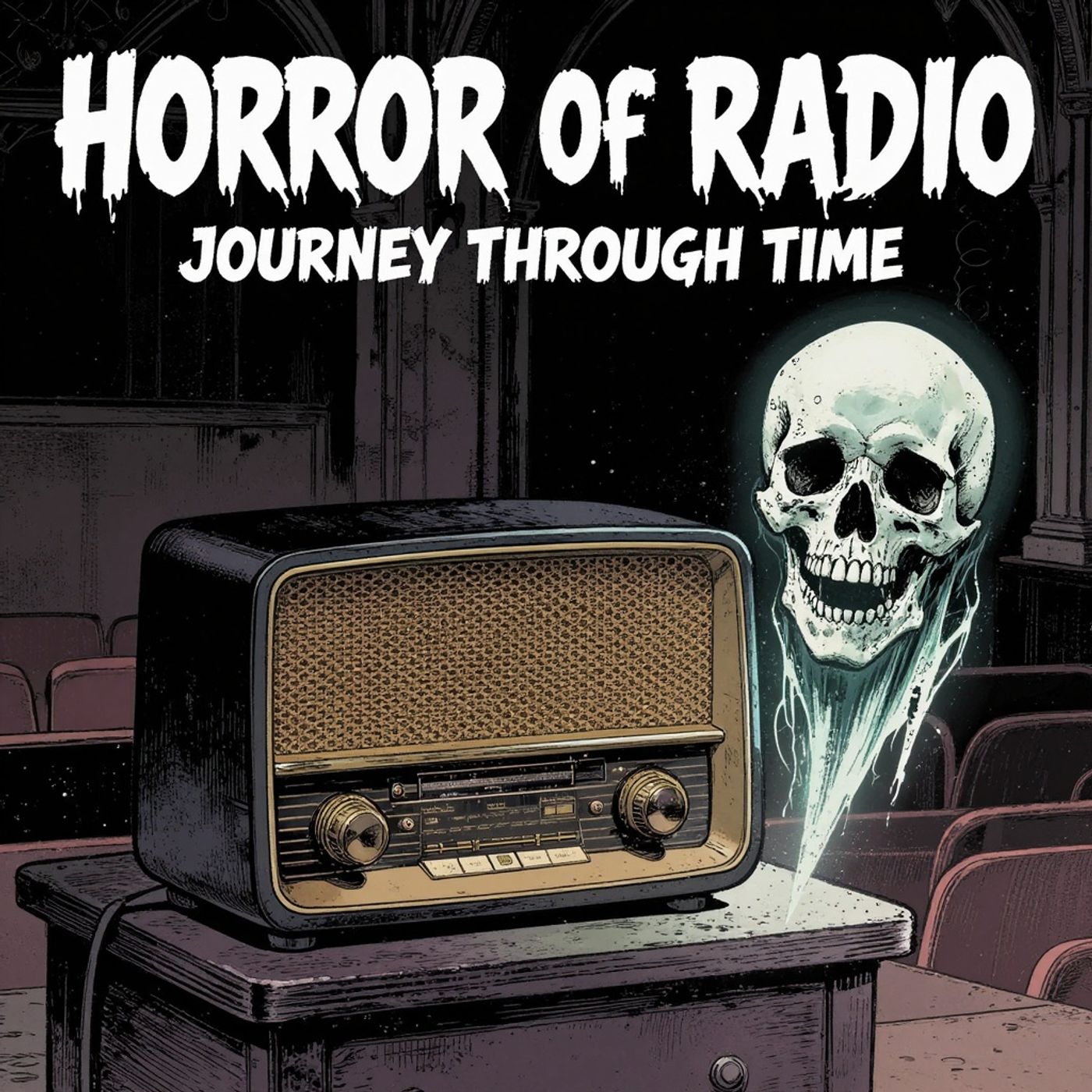
Horror Of Radio: A Journey Through Time | Golden Age to Modern Nightmare
Game plan
In this special, in-depth audio documentary titled "Horror Of Radio: A Journey Through Time," we take listeners behind the microphone to explore the dark, evolutionary roots of the audio horror genre.
We trace the history of auditory fear straight back to its birthplace, examining pioneering masterpieces like The Witches’ Tale—the world's very first radio horror anthology program. Discover how early sound effects artists, brilliant writers, and haunting voice actors weaponized the theater of the mind to terrify millions of listeners in their own living rooms. The journey doesn't stop in the golden age; we travel through the decades of broadcast history to show how those vintage foundations directly paved the way for modern immersive audio dramas like Doorway To Nightmare today.
Plug in your headphones and hit subscribe for a captivating, historical deep dive into the voices, scripts, and sinister sounds that have kept humanity afraid of the dark for nearly a century.
SOME CLIPS AND AUDIO HAVE BEEN USED UNDER THE CREATIVE COMMONS FAIR USE ACT. NO INTENTIONAL COPYRIGHT INFRINGEMENT IS MADE AND ALL COPYRIGHTS BELONG TO THE ORIGINAL OWNERS
HELP SUPPORT OUR CHANNEL!!!
https://www.buymeacoffee.com/doorway
https://www.patreon.com/doorwaytonightmare
MERCHANDISE AVAILABLE AT OUR STORE
https://www.doorwaytonightmare.com
EPISODES NOW AVAILABLE ON IHeart.com, SPOTIFY, PANDORA, APPLE, AUDIBLE
AND OTHER PODCAST PLATFORMS!
Please like, share, subscribe, and comment
All music used Licensed under Creative Commons Attribution 3.0
https://creativecommons.org/licenses/..
Carnival Music by Darren Curtis (Creative Commons Attribution 3.0)
Kevin MacLeod https://www.youtube.com/channel/UCSZX...
Shankar Yogi
/ musicwithsh. .
Speaker 1: It is close to bedtime, but your mind is still racing.
Speaker 1: You need some kind of distraction. You sit in your comfortable chair, a dim light illuminating the living room. On a small table beside you sits a magic box. With the click of a switch, You transport yourself into another world.
Speaker 2: Good evening, friends of the Inner Sanctum. This is your host, Raymond.
Speaker 1: Darling, fantastic.
Speaker 3: The Strange Doctor Weird.
Speaker 4: You unlock this door with the key of imagination. You've just crossed over into the Twilight Zone.
Speaker 5: Come in.
Speaker 6: Welcome.
Speaker 1: I'm E.T.
Speaker 6: Marshall.
Speaker 1: A world of complete imagination. Where you have the pictures. You listen and throb and feel the shivers begin to run up your spine. This was the horror of radio.
Speaker 7: This is KDKA of the Westinghouse Electric and Manufacturing Company in East Pittsburgh, Pennsylvania.
Speaker 1: In October 1920, Westinghouse obtained a commercial broadcasting authorization from the Department of Commerce's Bureau of Navigation. On November 2, 1920, KDKA transmitted its first scheduled broadcast.
Speaker 8: We shall now broadcast the election returns. We are receiving these returns through the cooperation and by special arrangements with the Pittsburgh Post and Sons. We'd appreciate it if anyone hearing this broadcast would communicate with us, as we are very anxious to know how far the broadcast is reaching and how it is being received. While we're waiting for the returns to come in over the telephone, direct from the Post and Sun, I'll give you the list of offices in today's presidential election.
Speaker 8: Here they are. Some 30 million Americans are electing a President of the United States, a Vice President, 34 United States Senators, 435 members of the House of Representatives, governors of 34 states, and thousands of minor officers.
Speaker 1: The station went on to provide regular programming thereafter. It was first to broadcast professional baseball by announcing the game between the Pittsburgh Pirates and the Philadelphia Phillies on August 5th, 1921.
Speaker 1: On October 8, 1921, KDKA aired their first live football game between West Virginia University and the University of Pittsburgh. Touchdown! By 1924, there were over 600 commercial broadcast stations in the U.S.
Speaker 2: Ladies and gentlemen, the President of the United States.
Speaker 1: On March 12, 1933, President Roosevelt used the broadcast radio to speak directly to the nation in the first of his famous fireside chats to help the country manage the Great Depression.
Speaker 9: My friends, I want to talk for a few minutes with the people of the United States about banking. To talk with the comparatively few who understand the mechanics of banking... but more particularly with the overwhelming majority of.
Speaker 10: You who use banks for the.
Speaker 9: Making of deposits and the drawing of checks.
Speaker 1: And yes, I understand he was actually sitting in a room at the White House next to a fireplace during the broadcast. He went on to hold about 30 of these chats, giving the public unprecedented access to a president's policies and decision-making. December 7, 1941, KGU in Honolulu, Hawaii broadcast several hours of live updates during the surprise attack on Pearl Harbor.
Speaker 11: KGU in Honolulu, Hawaii. I am speaking from the roof of.
Speaker 6: The Atakaya Public Company building.
Speaker 12: We have witnessed this morning the distant view.
Speaker 11: Of Pearl Harbor Yesterday, December 7th, 1941, a date which will live in infamy.
Speaker 1: Millions of Americans tuned in to hear Harry Truman announce Germany's unconditional surrender in World War II.
Speaker 2: I wish that Franklin D. Roosevelt had lived to see this day.
Speaker 5: General Eisenhower informs me that the forces of Germany have surrendered to the United Nations. The flags of freedom fly all over Europe.
Speaker 1: They tuned in when Martin Luther King Jr. gave his I Have a Dream speech.
Speaker 13: Even though we face the difficulties of today and tomorrow, I still have a dream. It is a dream deeply rooted in the American dream.
Speaker 1: And Neil Armstrong's first words on the moon. The one.
Speaker 14: Thing that radio was most remembered for was the entertainment.
Speaker 1: News and sports were pretty much a given, but being able to sit in the comfort of your own home and be entertained by top performers of the day was truly remarkable. On May 21st, 1931, people tuned into something that was very different from the news, sports, and music.
Speaker 1: The Witch's Tale.
Speaker 15: The fascination of the eerie, weird, blood-chilling tales told by old Nancy, the witch of Salem, and Satan, her wise black cat.
Speaker 6: They are waiting, waiting for you.
Speaker 1: The Witch's Tale premiered and became the very first radio horror anthology program.
Speaker 10: 107-year-old I be today.
Speaker 15: Yes, sir, 107-year-old.
Speaker 10: Well, Satan, we got a lot of yarn.
Speaker 15: To spin these folks tonight.
Speaker 10: So if you'll give.
Speaker 15: Word to douse all lights, we'll get right smack down the business.
Speaker 1: Old Nancy, the hostess, was played first by stage actress Adelaide Fitz Allen. After her death, the role was taken over by then 13-year-old Miriam Wolfe. The stories were mostly original, written by the creator Alonzo Dean Cole, but there were a few adaptations.
Speaker 16: What do you want of me?
Speaker 15: To show you my home, Frankenstein. This barren cave upon the mountainside... exposed to the winds and howling beach. Here I, the monster you created, live, whilst you reside in comfort. I want to show you my solitude, whilst you are planning marriage.
Speaker 12: I thought you dead.
Speaker 15: You made me too strong. The fall you heard had killed me could not destroy my body. I simply disappeared from man because man has shut me out. Even you cannot bear to look at my repulsive being. Even you, my maker.
Speaker 17: You, my gargant.
Speaker 1: Maybe it's got some way to get in.
Speaker 12: You fired every outside door and shutted every window.
Speaker 10: In the next room. Put a little lighter in the hole in that shutter.
Speaker 6: It squeezed through and broke the chain.
Speaker 1: With that heavy door key. It's coming this way.
Speaker 17: Shut the door, quick.
Speaker 18: Too late. It slipped by me.
Speaker 10: Get away from me!
Speaker 6: Away!
Speaker 1: Shoot it!
Speaker 6: Shoot it!
Speaker 1: Bullets don't stop it and it's almost six o'clock.
Speaker 18: It's got me in the corner and I can't get away.
Speaker 6: Here, keep your wits.
Speaker 11: It's only a hand.
Speaker 19: You can throw it off like you did before.
Speaker 15: Then we'll find some way to destroy it.
Speaker 6: Good Lord!
Speaker 18: It's pulling that table cover out of the lamp! The lamp is falling!
Speaker 6: Ah, the oil's on the clothes!
Speaker 18: I'm burning!
Speaker 6: You've got to save him, Bert!
Speaker 20: Even a dog can't die like that!
Speaker 6: I can't get to him!
Speaker 9: There's a wall of flame between!
Speaker 18: The clock!
Speaker 6: Ah! The clock! Oh, he's shot himself!
Speaker 1: The series ran until June of 1938 over the Mutual Radio Network, as well as being syndicated. It ushered in The Age of Radio Horror. But in 1938, the real horror hit home.
Speaker 21: The Columbia Broadcasting System and its affiliated stations present Orson Welles and the Mercury Theater on the air in The War of the Worlds by H.G.
Speaker 1: Wells. October 30th, 1938. Orson Welles, who had already made a name for himself with his Mercury Theater and playing the dual role of Lamont Cranston, alias The Shadow.
Speaker 21: Ladies and gentlemen, the director of the Mercury Theater and star of these broadcasts.
Speaker 1: Orson Welles.
Speaker 22: We know now that in the early years of the 20th century, this world was being watched closely by intelligences greater than man's, and yet as mortal as his own. We know now that as human beings visited themselves about their various concerns, they were scrutinized and studied. perhaps almost as narrowly as a man with a microscope might scrutinize the transient creatures that swarm and multiply in a drop of water. With infinite complacence, people went to and fro over the earth about their little affairs, serene in the assurance of their dominion over this small, spinning fragment of solar driftwood which, by chance or design, man has inherited out of the dark mystery of time and space.
Speaker 22: Yet across an immense, ethereal gulf Minds that are to our minds as ours are to.
Speaker 23: The beasts in the jungle.
Speaker 22: Intellects, vast, cool, and unsympathetic, regarded this earth with envious eyes and slowly and surely drew their plans against us. In the 39th year of the 20th century came the Great Disillusionment.
Speaker 1: In the hour that was to follow, the nation panicked. Police lines were overloaded with calls from fighting citizens. People looked to the skies for spacecrafts. But what could have caused such a panic? Simply that hardly anyone heard the opening to the War of the Worlds. Instead, they tuned into a very popular program on NBC called The Edgar Bergen-Charlie McCarthy Show.
Speaker 13: The makers of Chase and Sanborn Coffee, the superb blend you know is fresh, present the Chase and Sanborn Hour, and your host, Don Amici.
Speaker 18: Don Amici.
Speaker 24: This is Don Amici rounding up the Chase and Sanborn gang and greeting you for.
Speaker 19: All of them.
Speaker 10: Hey, hey, hey, hey, hey. What's going on here?
Speaker 25: Oh, well, Charlie, Judy only meant to say.
Speaker 14: Yeah, yeah, I heard what she said.
Speaker 6: I heard.
Speaker 10: Oh, shucks, Charlie. I was only complimenting you. Why, you ain't got nothing against me.
Speaker 26: Have you?
Speaker 27: No, but I can very easily develop something.
Speaker 11: Oh, now.
Speaker 10: Listen here, now that's too bad, Charles M.
Speaker 20: You see, I was hoping that.
Speaker 5: I and you could start to kind of get.
Speaker 10: Together like, you know. I started to like you.
Speaker 27: You do? I sure do.
Speaker 12: Bergen, get your gun.
Speaker 13: Never mind, Charlie.
Speaker 24: I'm sure you'll feel better when you know that our guest tonight is one of our mutual friends honoring us with a return visit.
Speaker 2: The lovely Madeline Carroll. Oh, Madeline, da-da-da-dum-da-da. Thanks, Charlie, but we'll let Nelson Eddy do the singing.
Speaker 12: And it's the rousing, rip-roaring Song of the Vagabonds.
Speaker 2: From the Vagabond King.
Speaker 18: Come on, you're.
Speaker 1: The opening singer that night, while popular, was doing one of his more unpopular tunes. So people did what they tend to do today. They changed the channel to CBS and heard.
Speaker 28: The flash in the sky was visible within a radius of several hundred miles, and the noise of the impact was heard as far north as Elizabeth.
Speaker 9: We have dispatched a special mobile unit to the scene. We take you now.
Speaker 12: To Grover's Mill, New Jersey.
Speaker 8: I guess that's it.
Speaker 12: Yes, I guess that's the thing directly in front of me.
Speaker 14: Half buried in.
Speaker 17: A vast pit.
Speaker 12: Spectators now are pressing close to the object in spite of the efforts of the police to keep them back. This end of the thing is beginning to flake off. The top is beginning to rotate like a screw and the thing must be hollow.
Speaker 17: Move it! Keep those idiots back! Keep those idiots back!
Speaker 13: Ladies and gentlemen.
Speaker 12: This is the most terrifying thing I've ever witnessed. Something, I can see, turned out of that black hole through luminous disks. The eyes, it might be a face, it might be almost... Heavens, something breaking out of the shadow like a gray snake. Now it's another one and another one and another one. They look like tentacles to me. I can see the thing's body.
Speaker 29: Now it's large. It's as large as a bear.
Speaker 6: It's different.
Speaker 12: It's like wet leather. But it's a face. Ladies and gentlemen, it's indescribable. I can hardly force myself to keep looking at it. No need to push the crowd back now. They're willing to keep their distance. The captain's conferring with someone. I can't quite see who.
Speaker 17: Ah, yes.
Speaker 12: I believe it's Professor Pearson.
Speaker 17: Yes, it is.
Speaker 12: Now they've parted and the professor moves around one side. studying the object while a captain and two policemen advance with something in their hands.
Speaker 9: I see it now.
Speaker 17: It's a white hat.
Speaker 12: It's tied to a pole. Flag of truce. Those creatures know what that means.
Speaker 28: What anything means.
Speaker 11: Wait a minute.
Speaker 17: Something's happening.
Speaker 12: A humped shape is rising out of the pit.
Speaker 17: And they make out a.
Speaker 14: Small beam of light against a mirror.
Speaker 18: What's that?
Speaker 12: It's a jet of flame springing from the mirror and it leaps right at the advancing men. After that, the imagination took over. Radio horror was now in its heyday.
Speaker 1: In the fall of 1933, NBC writer Willis Cooper conceived the idea of, quote, a midnight mystery serial to catch the attention of the listeners at the witching hour, end quote. The idea was to offer listeners a dramatic program late at night, at a time when the competition was mostly airing music. At some point, the serial concept was dropped in favor of an anthology format emphasizing crime thrillers and the supernatural the first series of shows each about 15 minutes long ran on a local nbc station wner at midnight wednesdays starting in january of 1934 by april this series proved successful enough to expand to a half an hour In January 1935, the show was discontinued in order to ease Cooper's workload.
Speaker 1: He was then writing scripts for the network's prestigious Immortal Dramas program, but was brought back by huge popular demand a few weeks later. After a successful tryout in New York City, the series was picked up by NBC in April of 1935 and broadcast nationally, usually late at night and always on Wednesdays.
Speaker 2: Ironized Yeast presents Lights Out Everybody.
Speaker 1: Cooper stayed on the program until June of 1936. when another Chicago writer, Arch Obler, took over.
Speaker 28: It is later than you think.
Speaker 30: This is Arch Obler bringing you another in our series of stories of the unusual. And once again, we caution you. These lights-out stories are definitely not for the timid soul. So we tell you calmly and very sincerely, if you frighten easily, turn off your radio now.
Speaker 10: There wasn't any place for anyone to hide. I saw that stone. It seemed to come down out of the air. So slowly. Florence, if you don't stop talking like that... You remember what... What Edna said. It throws things. Stop looking at me like that. You're giving me the jitters. She said the poltergeist throws things.
Speaker 17: Spirit of evil.
Speaker 10: Florence Roth, have you gone crazy too? Why should we laugh at things like that? What right have we got to laugh? How do we know there aren't powers we can't see or understand? Powers of evil that revenge an insult just like an evil man. Kay, how do we know? What are you talking like that for? What are you trying to scare me for?
Speaker 16: You.
Speaker 10: You're supposed to be the most intelligent one of us all. You with your college degrees. Sure, sure, I've danced on the grave.
Speaker 9: But the dead are dead and they can't revenge a thing.
Speaker 10: I'm not afraid. I'm not afraid of anything. I tell you.
Speaker 6: What?
Speaker 10: Miss Edna. Come on. Edna, we're coming to you. Don't be afraid. We're coming. Open the door, Florence. It's not locked. It won't open. Here, let me. Edna, what is it?
Speaker 6: What?
Speaker 24: Edna, what?
Speaker 26: On your head.
Speaker 1: A character might be buried, eaten, or skinned alive, vaporized in a ladle of light-hot steel, absorbed by a giant slurping amoeba, have his arm torn off by a robot, or forced to endure torture, beating, or decapitation, always with the appropriate blood-curdling acting and sound effects.
Speaker 31: I like concrete, don't you?
Speaker 10: Yes, it is clean.
Speaker 23: Yes.
Speaker 31: Covers everything. You know how deep that concrete is? Three feet deep.
Speaker 23: Yes, ma'am.
Speaker 31: Three feet deep. And I just poured it an hour before you honored me with your presence.
Speaker 6: Three feet.
Speaker 31: That'll make a mighty thick slab of stone, won't it, Miss Nord? Thick enough to cover you.
Speaker 23: Ah.
Speaker 19: Ah.
Speaker 23: Yes, indeed.
Speaker 31: A fist at the point of the jaw is still a most effective soporific.
Speaker 23: Uh.
Speaker 31: You're quite a light woman, my dear Miss Nord. Up you go. And in you go.
Speaker 27: Face down.
Speaker 31: What an unusual bed you lie in, Miss Nord. Sinking down and down and down. And the concrete will harden. And I.
Speaker 31: I guess I will have to get myself a new housekeeper.
Speaker 29: Yes.
Speaker 10: Who's to blame?
Speaker 7: Who's to blame?
Speaker 10: Who's to blame? It's that kid who's to blame. Yeah, we read it in the papers. A crazy college kid.
Speaker 22: There.
Speaker 14: There he is.
Speaker 13: That's him.
Speaker 10: That's him.
Speaker 8: No, let me go.
Speaker 7: You fools.
Speaker 23: You.
Speaker 10: I've done a great thing. A wonderful thing. Created something no one ever thought of.
Speaker 17: No, let me down.
Speaker 23: Let me down.
Speaker 10: Let me down, you fools! I started the song, but I didn't know this would happen! You can't blame me for a miracle!
Speaker 29: No! No!
Speaker 6: No!
Speaker 10: Don't throw me down here! There's no bottom to it!
Speaker 23: No!
Speaker 18: No!
Speaker 1: Radio horror continued and became more and more popular. One of the most memorable programs was created by Hyman Brown and premiered on January 7, 1941. Hello. Hello.
Speaker 23: Oh.
Speaker 1: Oh, there you are.
Speaker 32: I was afraid for a moment that you had forgotten our appointment. Why, you almost scared me to death. And that won't do after all the pains I've taken to scare you. You remember me, don't you? I'm your host on behalf of the makers of Carter's Pills. And you're to be my guest tonight in the mysterious circle of the inner sanctum.
Speaker 1: The program's familiar and themed audio trademark was the eerie creaking door, which opened and closed the broadcast. Hyman Brown got the idea from a door in the basement that squeaked like hell.
Speaker 17: I was doing Dick Tracy, and it was very, very successful. And in those days, we had live sound effects. I'm talking about the late 30s. So you'd have a whole series of doors open, There was a door for when you went into the bank, and then there was a door when you went into a farmhouse, and there was a screen door, and there was a jail door. There was one door where the hinges were gone and the door was practically gone that squeaked and creaked. And I would use that when we were doing a Mysterioso type of storyline.
Speaker 17: That door was door number 11B or some such thing. I would write down, bring that door to the studio that day. But that door really talked to me. That door said, make me a star. I had a show called The Creaking Door. And he loved The Creaking Door. But he said, I don't like the title. Don't ask me why. It put some ideas in his head, I suppose. I don't know. And out of pique, out of just sheer nonsense, because I was a kid then, 1940. I was really young at this. I said, there were a series of, I saw an ad in the New Yorker magazine, which had just begun in 1928, and was beginning to become a very important magazine, for a Simon & Schuster series of mysteries, detective stories, called Inner Sanctum Mysteries.
Speaker 17: Oh, he said, that'd be a great title. Inner Sanctum, the creaking door, you go in, and you don't know what's on the other side of the door, said I.
Speaker 23: Fine.
Speaker 17: So now I had to get the rights to Inner Sanctum Mysteries, which I went and got from Simon & Schuster. We plugged a book every other week or some such thing. They gave me all the rights to Inner Sanctum.
Speaker 1: In all, 526 episodes were broadcast. The use of a host was to be copied by many other programs.
Speaker 33: Good evening, friends of the creaking door. This is your host to welcome you into the inner sanctum once again.
Speaker 17: Come in.
Speaker 33: Our little place may not be a mansion, but it has its advantages. For one thing, it's thoroughly scare-conditioned. The scream pipes are always in good working order. And the rent's quite reasonable. We get a cut rate.
Speaker 7: .
Speaker 6: What do you want?
Speaker 33: I'm from police headquarters.
Speaker 1: You'd better let me in.
Speaker 28: What do you want?
Speaker 1: I want some information about that dog that was buried in your garden. You're crazy. Who buried it there?
Speaker 10: There's no dog in my garden.
Speaker 32: Was there a dog in the house?
Speaker 10: I don't know.
Speaker 1: You'd better answer my questions, Mr. Adams, unless you prefer going to jail.
Speaker 10: I don't know anything.
Speaker 1: Who killed Mrs.
Speaker 17: Putnam?
Speaker 10: Everybody. Everybody hated her.
Speaker 1: What do you mean by that?
Speaker 10: Everyone in that house wanted.
Speaker 30: Her to die.
Speaker 10: Her brother cursed her. Williamson might have poisoned her.
Speaker 1: What about you?
Speaker 7: Me? I.
Speaker 10: I didn't hate her anymore. She promised to leave all her money to me.
Speaker 3: Oh?
Speaker 20: Why?
Speaker 10: Well, it was her only sign of repentance.
Speaker 17: I washed the knife.
Speaker 19: Quickly, but carefully.
Speaker 8: Very quickly, but very carefully.
Speaker 6: It didn't take long.
Speaker 19: The stains hadn't hardened much.
Speaker 6: The brown stain. Carl? Yes?
Speaker 18: Someone to see you.
Speaker 29: A man.
Speaker 8: What does he want?
Speaker 12: He didn't say, except.
Speaker 9: That it was.
Speaker 33: He said he's a lieutenant.
Speaker 31: A Lieutenant Greg.
Speaker 10: From the police.
Speaker 24: Oh, well, now it's really time to close that there squeaking door until next Tuesday.
Speaker 2: So, until then.
Speaker 18: Good night.
Speaker 2: Pleasant dreams.
Speaker 1: One of the longest-running antology programs was... Sustance. Alfred Hitchcock directed its audition show for the CBS summer series Forecast. This was an adaptation of The Lodger, filmed by Hitchcock in 1926.
Speaker 28: This is Hollywood and CBS presenting forecast number four. Herbert Marshall directed by Alfred Hitchcock in the first program of a proposed new series entitled Suspense.
Speaker 23: Suspense.
Speaker 28: Tonight's forecast program, ladies and gentlemen, represents the ideal form of collaboration.
Speaker 1: Mr.
Speaker 28: Alfred Hitchcock, brilliant English director of such outstanding motion pictures as The 39 Steps, Rebecca, and Foreign Correspondent, was eager to create a very special type of radio drama, The Suspense Story. As narrator and star for his production, he thought at once of the distinguished actor with whom he had been associated in countless British film successes, Herbert Marshall.
Speaker 23: Mr.
Speaker 28: Marshall suggested that they dramatize a certain favorite story of his. And that story happened to be the very one Mr.
Speaker 6: Hitchcock had had in mind.
Speaker 31: Mrs.
Speaker 28: Bella Klan's classic in chills, The Lodger.
Speaker 1: Both Marshall and Hitchcock decided on the same story to bring to the airways, which happened to be a favorite of both of them. The Lodger. Alfred Hitchcock had filmed the story in 1926, And since then, it had remained as one of his favorites.
Speaker 30: And now, Mr.
Speaker 8: Kennett, I understand you heard this man speak.
Speaker 20: Oh, yes.
Speaker 23: He had a rather high, hesitating voice.
Speaker 10: An educated man, I would judge, but quite mad.
Speaker 2: What do you mean by that?
Speaker 31: Well, as he emerged from the fog, he was talking aloud to himself.
Speaker 19: Believe me, sir, he was reciting scriptures from the Bible.
Speaker 23: Oh!
Speaker 1: Herbert Marshall portrayed the mysterious lodger, and co-starring with him were Edmund Gwynn and character actress Lorraine Tuttle, as the rooming housekeepers who start to suspect that their new boarder might be the notorious Jack the Ripper.
Speaker 34: Adapting the script to radio was not a great technical challenge for Hitchcock, and he cleverly decided to hold back the ending of the story from the listening.
Speaker 1: Audience in order to keep them in suspense themselves. This way, if the audience's curiosity got the better of them, they would write into the network to find out whether the mysterious lodger was, in fact, Jack the Ripper.
Speaker 10: She's not here.
Speaker 31: What about the dining room?
Speaker 35: She's not there.
Speaker 10: She's not downstairs.
Speaker 36: Then there's just his.
Speaker 6: Go on.
Speaker 27: Open the door.
Speaker 1: Hundreds of letters came in from faithful listeners asking how the story ended. Actually, a few wrote to reps claiming that it was indecent and immoral inquiry to present such a production without giving the solution.
Speaker 8: Okay, Mr.
Speaker 7: Hitchcock, that's cut and clear.
Speaker 1: Did you say cut?
Speaker 27: What's the idea, Hitch?
Speaker 1: I've a few more lines to do.
Speaker 6: As Mr.
Speaker 2: Marshall, the narrator, you have.
Speaker 23: Not as Mr.
Speaker 1: Sleuth, the lodger. Hitch, you can't stop the playwright here.
Speaker 9: It isn't fair, you know.
Speaker 14: Why isn't it, Bob?
Speaker 28: What became of Mr.
Speaker 27: Sleuth?
Speaker 1: Oh, him.
Speaker 12: Why, he left that afternoon.
Speaker 31: They never saw him again.
Speaker 14: And now I think we ought to say something about the Columbia forecast.
Speaker 4: Mr.
Speaker 6: Hitch, stop there.
Speaker 12: Will you please?
Speaker 10: Stop him, Mr.
Speaker 9: Marshall.
Speaker 6: Hitch, listen to me.
Speaker 23: Yes?
Speaker 19: What is it?
Speaker 28: They want to know when the Avenger finally was caught.
Speaker 19: Oh.
Speaker 29: Well, let me ask you something, Bob.
Speaker 30: Are you acquainted with Loretta Young?
Speaker 1: Yes, what's that got to do with it?
Speaker 30: Well, in next week's Columbia preview series, Miss Young will take.
Speaker 14: The starring role in the drama of an American Red Cross nurse.
Speaker 8: That's good news, isn't it?
Speaker 5: Oh, that's great.
Speaker 28: But now listen, Hitch, you've just got to tell that audience exactly when and how Mr.
Speaker 1: Sleuth was caught.
Speaker 23: Caught?
Speaker 30: Why on earth should he be caught?
Speaker 6: Why?
Speaker 32: Well, he was the Avenger, wasn't he?
Speaker 8: Was he?
Speaker 6: Yes.
Speaker 1: Suspense would run until 1962, with 945 original broadcasts. The most popular of these, originating seven times throughout the series, was a play titled Sorry, Wrong Number.
Speaker 10: Now what's the matter? Why did they stop ringing all of a sudden? What time is it? Where's my clock?
Speaker 37: Oh, where did I put it?
Speaker 10: It's 5 to 11. They've decided something. They're sure I'm home. They've heard my voice answer them just now. That's why they've been ringing me. Why no one has answered me?
Speaker 1: If the actress playing the lead role sounds familiar, then you probably remember a TV series titled Bewitched. That is indeed Agnes Moorhead, who played the part of Samantha Stevens' mother, Indora.
Speaker 19: Your call, please.
Speaker 10: Where were you just now? Why didn't you answer at once? Give me the police department.
Speaker 17: I'm sorry.
Speaker 28: The line is busy.
Speaker 8: I will call you.
Speaker 18: Busy?
Speaker 10: But that's impossible. The police department can't be busy. There must be other lines available.
Speaker 8: The line is busy. I will try to get them for you later.
Speaker 18: Oh, no.
Speaker 10: I've got to speak to them now. It may be too late. I've got to talk to someone.
Speaker 8: What number do you wish to speak to?
Speaker 15: To, please.
Speaker 10: I don't know, but there must be someone to protect people inside the police department. A detective agency.
Speaker 28: You will find agencies listed in the classified directory.
Speaker 10: But I don't have a classified. I mean, I'm too nervous to look it up, and I don't know how to use the directory.
Speaker 38: I will connect you with information.
Speaker 17: Perhaps they will be able to help you.
Speaker 9: No, no, no.
Speaker 10: Oh, you're being spiteful, aren't you? You don't care, do you, what happens to me?
Speaker 21: I could die and you wouldn't care!
Speaker 11: Oh, stop it!
Speaker 29: Stop it!
Speaker 10: I can't stand it anymore!
Speaker 1: The play was written by Lucille Fletcher, who also penned another popular suspense outing titled The Hitchhiker. I knew I'd see him again.
Speaker 38: Maybe at the next turn of the road. I knew that when I saw him next.
Speaker 6: I would run him down.
Speaker 18: But I didn't see him.
Speaker 6: Again.
Speaker 38: I didn't see him until late next afternoon.
Speaker 15: I stopped a car at a.
Speaker 38: Sleepy little junction just across the border into Oklahoma to let a train pass by. When he appeared across the tracks. Leaning against the telephone pole. Perfectly airless, dry day. The red clay of Oklahoma was baking under the southwestern sun.
Speaker 38: Yet there were spots of fresh rain on his shoulders. I couldn't stand that. Without thinking, blindly, I started the car across the tracks.
Speaker 6: He didn't even look up at me.
Speaker 38: He was staring at the ground.
Speaker 17: I stepped on the gas hard.
Speaker 6: Bearing the field sharply toward him.
Speaker 38: I could hear the train in the distance now, but I didn't care then.
Speaker 23: Something went wrong with the car.
Speaker 38: The train was coming closer.
Speaker 31: I could hear its bell ringing and the cry of its whistle. Still, he stood there. And now I knew that he was beckoning, beckoning.
Speaker 28: Me to my death.
Speaker 1: The lead role was portrayed by Orson Welles, and later it would be adapted by Rod Serling for his TV series, The Twilight Zone. Quiet, please. Quiet, please. Another notable series was produced, written, and directed by Willis Cooper, who had created Lights Out. The show's star and announcer was Ernest Chandler. It debuted on the Mutual Network June 8, 1947 through June of 1949, with a total of 106 shows.
Speaker 26: The Mutual Broadcasting System presents Quiet Please, which is written and directed by Willis Cooper and features Ernest Chappell.
Speaker 1: The most notable? A show entitled The Thing on... on the Forable Board.
Speaker 19: And I heard a little sound. The sound of a kid crying. And there wasn't any kid up there. And I heard it again and it came from above my head and I took out my revolver and I loaded it carefully. I started up the ladder to the four-wheel board. Well, there wasn't anything up there, nothing I could see.
Speaker 1: There was a voice crying.
Speaker 21: The voice of a little kid.
Speaker 19: Then there was a movement behind the rack of drill pipes and I saw the pipe move and I yelled, Come out of there, whoever you are! Come out or I'll start shooting! And the stand of pipes shivered. And I thought, what can it be that can handle that heavy pipe like.
Speaker 6: Like Jack Straws.
Speaker 1: And then there was a crash.
Speaker 19: The whole stand of pipe fell over and I just got out of the way in time. And I was alone on the formal board.
Speaker 1: With the thing. There would then be a plethora of programs introduced to cause the spine to tingle and the listener to lose sleep.
Speaker 23: Sleep no more.
Speaker 25: Turn down the lights. Sink back in your chair and don't look into the shadows. In the shadows, there may be moving things. Tonight, it may be... You.
Speaker 37: Will speak no more.
Speaker 39: The Mutual Broadcasting System presents The Mysterious Traveler.
Speaker 19: Written, produced, and directed by Robert A.
Speaker 31: Arthur and David Colgan.
Speaker 39: This is the Mysterious Traveler, inviting you to join me on another journey into the realm of the strange and the terrifying.
Speaker 16: I hope you.
Speaker 39: Will enjoy the trip, and it will thrill you a little and chill you a little. So settle back, get a good grip on your nerves, and be comfortable, if you can.
Speaker 4: Dark fantasy.
Speaker 3: I am the man who came back.
Speaker 18: The creaking door.
Speaker 16: The creaking door.
Speaker 29: No.
Speaker 10: No, stay where you are.
Speaker 30: Do not break the stillness of this moment.
Speaker 36: For this is a time of mystery. A time when imagination is free and moves forward swiftly, silently. This is The Haunting Hour.
Speaker 24: The mummers in the little theater of the air.
Speaker 18: Now, the hermit.
Speaker 23: Ghost stories.
Speaker 6: Weird stories.
Speaker 29: And murders, too.
Speaker 6: The hermit knows.
Speaker 10: Of them all. Turn out your legs. Turn them out.
Speaker 2: Can the dead return to life?
Speaker 39: Listen to the weird circle.
Speaker 1: Many famous actors and actresses were featured in various productions. Vincent Price, Bela Lugosi, and Peter Lorre all had their own series.
Speaker 5: Mystery in the Air, starring Peter Lorre, presented by Camel Cigarettes.
Speaker 1: Many other horror anthology programs were scattered across the country. airing only on the West Coast or were more localized.
Speaker 6: I'm the Whistler.
Speaker 18: It is a quarter of an hour until midnight.
Speaker 29: Time for us to go to the Black Castle. Each Friday evening, we come to this remote spot, a place of mystery and terror, where a gaunt-footed figure appears and sits at the keyboard of the ruined old organ, mumbling and gibbering his fantastic tales as his talon hands grip the cracks.
Speaker 23: Ah!
Speaker 31: Little do they know.
Speaker 1: There were plenty of detective dramas and even science fiction, but the horror programs were always favored. Along came the 60s, and radio drama had all but died out. With the last play of suspense airing on September 30, 1962, radio was regulated back to music, news, and sports. Come in.
Speaker 19: Welcome.
Speaker 6: I'm E.T. Marshall.
Speaker 1: Until Hyman Brown, creator of Inner Sanctum in the 1940s, came along yet again.
Speaker 20: We're going to be on the air seven nights a week with a 53-minute complete mystery drama each night. Seven nights a week. Never in the history of radio broadcasting did anybody attempt to do a series seven nights a week. The idea was one of many that I had in my heart and in my gut for the last five, six, eight years, and I've been trying with networks and with agencies to make them realize that radio drama is one of the most unique forms of entertainment in the world of theater, in the world of communication.
Speaker 20: and they somehow didn't respond to me. You must know from all that happens on your program and the responses you get that radio drama offers a listener something which they could not conceivably get in theater, in motion pictures, or in television. Your imagination, you, yourself, your fantasy, comes to the spoken word, and you create a unique... form of identification, a unique relationship to what's happening and it enhances. I call it color radio. You can do anything you want with your imagination once I lead you to the point of exercising that imagination.
Speaker 1: The creaking door was opening again and in 1974, thrills and chills, the fear you could hear returned. Broadcasting seven nights a week, the CBS Radio Mystery Theater had 1,399 original episodes over a nine-year period. the smell, the decayed....
Speaker 23: Frank.
Speaker 37: Frank. No, no, no, no.
Speaker 31: He's unconscious.
Speaker 19: We'll talk to him later.
Speaker 27: Tolga, did your men find anything else?
Speaker 2: Just the grass.
Speaker 23: It's curious, Tom.
Speaker 31: I don't see anything, Pat. Yes, you do, Tom, but it doesn't mean anything to you. We weren't here when we found Flip. The air was flattened.
Speaker 6: It was the same.
Speaker 31: Strange discoloration.
Speaker 7: What's all this got to do with Frank here?
Speaker 31: I don't know. But I promise you, I'll find out.
Speaker 27: It's hard to see because there's a storm brewing. I see the leaves blowing and the trees bending.
Speaker 16: Ah, there's something else.
Speaker 23: I'm thinking.
Speaker 6: A woman.
Speaker 10: Oh, please. I mustn't slip or fall.
Speaker 19: He's following me.
Speaker 6: I know he's following you, dear God. Help me. Help me.
Speaker 1: I see something glowing.
Speaker 6: A dress.
Speaker 7: Yes.
Speaker 16: It's a dress.
Speaker 27: A long dress. The girl is holding it up as she's running. I have to catch it.
Speaker 18: He's gaining.
Speaker 19: He's closer.
Speaker 1: I can see the gleam of the night.
Speaker 6: The dress. What color was the.
Speaker 1: Dress, David?
Speaker 23: Can you see?
Speaker 27: She's gone now.
Speaker 15: Gone.
Speaker 1: The color of the dress.
Speaker 6: Was it white?
Speaker 23: No.
Speaker 17: Not white.
Speaker 6: It was yellow.
Speaker 27: A yellow dress with a pale matching scarf and a lace handkerchief. The handkerchief is white.
Speaker 1: But the dress is.
Speaker 23: This is E.G.
Speaker 5: Marshall inviting you to return to our mystery theater for another adventure in the macabre. Until next time, pleasant dreams.
Speaker 1: With its success, there proceeded even more radio anthologies.
Speaker 38: The General Mills Radio Adventure Theater.
Speaker 17: Welcome.
Speaker 38: I'm Tom Bosley, bringing you the world of adventure.
Speaker 6: The world of your imagination. A world as vast as.
Speaker 38: The universe, which you can enjoy through the magic of radio. All you need to do is listen.
Speaker 1: The Price of Fear.
Speaker 28: Brought to you by Vincent Price.
Speaker 1: Hello there.
Speaker 12: You might be aware that as an actor, I've become associated almost entirely with what are known as horror movies.
Speaker 1: I'm Rod Serling. You're listening to The Zero Hour.
Speaker 6: Rest your eyes.
Speaker 1: Exercise your imagination.
Speaker 27: This week, Charles Larson's inside story of television murder.
Speaker 6: Someone's death.
Speaker 14: That's the theme from Sears Radio Theater, which will be brought to you Monday through Friday on this station. Today, Vincent Price will bring you a generous helping of mystery and suspense.
Speaker 31: Tomorrow, Cicely Price will enthrall you with tales.
Speaker 14: Of love and hate, dramas involving human emotions. Friday, Richard Widmark will host Tales of Adventure in outer space, under the sea, anywhere there is adventure. Monday, you'll hear stories of the Golden West and the West we know today with Lorne Green as your host. And on Tuesday, you can laugh with Andy Griffith as your host for Sears Radio Theater. that are funny. The Sears Radio Theater will begin after this message.
Speaker 18: From your local station.
Speaker 16: Three girls on an island in the Aegean Sea looking for a good time.
Speaker 6: Wine is cheap.
Speaker 16: Blazing hot. It's the same sun which beat down on Poseidon when he made these islands from mountains he tore from the mainland. But these are modern times. It wouldn't do to ruminate too much on the antics of the gods of a bygone age. Not a good idea at all.
Speaker 4: You unlock this door with the key of imagination. Beyond it is another dimension, a dimension of sound, a dimension of sight, a dimension of mind. You're moving into a land of both shadow and substance, of things and ideas. You've just crossed over into the Twilight Zone.
Speaker 18: The Twilight Zone.
Speaker 35: Within the far reaches of deep space, there remain unknown planets, journeys into galaxies yet uncharted. Stellar exploration is the newfound adventure. High above Earth's windy skies, a thousand miles in space, a large wheeling disc lazily drifts in orbit. a space station whose official designation is the Arthur C. Clarke Astronomical Observatory. To those living and working aboard, it is simply called Starlab. Their lives and adventures become our story on the threshold of alien worlds. Public broadcasting played a major role in the revival of radio drama, as well with the success of the Star Wars movies.
Speaker 23: A long time ago in a galaxy far, far away.
Speaker 19: She sounds smooth, Luke.
Speaker 31: Yeah, I worked on her all day yesterday.
Speaker 29: Well, listen, if you're planning on doing any racing, you can count me out, Skywalker.
Speaker 16: Tatooine is no academy, and you're no star pilot.
Speaker 29: Not yet, anyway.
Speaker 10: Well, I adjusted the thrust sequence for extra boost. You better hang on to your seat.
Speaker 6: Whoa!
Speaker 33: A play for radio.
Speaker 23: The Maze by Stuart Farrar.
Speaker 1: There were inputs from the BBC. The most successful being.
Speaker 22: The Hitchhiker's Guide to the Galaxy by Douglas Adams.
Speaker 33: Starring Peter Jones as The Book.
Speaker 34: The story so far. In the beginning, the universe was created. This has made a lot of people very angry. and been widely regarded as a bad move. Many races believe that it was created by some sort of god, though the Jatrovatid people of Viltvotel VI firmly believe that the entire universe was, in fact, sneezed out of the nose of a being called the Great Green Arcle Seizure. The Jatrovatids, who live in perpetual fear of the time they call the coming of the Great White Handkerchief, are small blue creatures with more than 50 arms each, who are therefore unique in being the only race in history to have invented the aerosol deodorant before the wheel.
Speaker 1: However, as it happened in the 60s, radio drama seemed to die out. There were the stations that carried the old-time radio shows, but original programming had all but died away.
Speaker 1: It lies in wait amidst your dreams. where nothing is ever how it seems. It is a portal to a terrifying world beyond the doorway to nightmare.
Speaker 6: Nightmare.
Speaker 1: With the internet and YouTube, there are now several creators and channels dedicated to not only playing the original old radio programs like Inner Sanctum, The Mysterious Traveler, and others, but an entirely new generation of artists who have come together to revitalize the theater of the mind. So the next time you just can't find anything to watch, try exercising your imagination.
Speaker 24: Oh, well, now it's really time to close that there squeaking door until next Tuesday. So until then, good night.
Speaker 2: Pleasant dreams.
Speaker 10: Oh, you're getting off at the next stopper.
Speaker 1: I'm sorry. But perhaps we'll meet again soon.
Speaker 28: I take this same train every week.
Speaker 19: And so, until next week at the same time, I am quietly.
Speaker 6: Yours, Ernest Chappell.
Speaker 5: This is E.G. Marshall inviting you to return to our mystery theater for another adventure in the macabre. Until next time, pleasant dreams.
Speaker 1: This is your host inviting you to return with us through the doorway to nightmare for another adventure into the world of your terrifying imagination. Until next time, slumber peacefully. Epilogue. The butler did it. You have been listening to The Horror of Radio, written and directed by Winslow Swan. This has been a presentation of Doorway to Nightmare. Thanks to the many contributors who have kept the art of radio drama alive, especially The Horror of Radio.
Speaker 18: Thank you.
Speaker 23: Thank you.
 Apple Podcasts
 Castbox
 Castro
 Goodpods
 Moon FM
 Overcast
 Pocket Casts
 Podbean
 Podcast Addict
 Podcast Republic
 Spotify
 Pandora
 Audible